For most patients we meet in Wilmington, neuropathy didn't arrive suddenly. It crept in — a little tingle here, a strange numbness there, dismissed as "just getting older." By the time the burning kept them up at night, the nerve damage had already been developing for years. Here are the seven signals that should send you to a doctor, not to your calendar.
Kennedy Health Center Medical Team
Functional Neurology & Pain Specialists • Wilmington, DE
Peripheral neuropathy affects an estimated 20 million Americans, and the numbers keep climbing. It's one of the most common complications of diabetes, but it also shows up in people who've never had a blood sugar problem a day in their life.
The cruel part is the timeline. Nerves don't fail overnight — they degrade slowly, over months and years, sending quiet signals that are easy to explain away. Many people we treat in our neuropathy program say the same thing: "I thought it was nothing." It's also important to know that uncontrolled blood sugar is the leading driver of nerve damage — which is why we screen both together.
It's rarely nothing. And the earlier it's caught, the more we can do to slow it — or in some cases, turn it around. So let's walk through the seven signs, in the order they typically appear.
Your peripheral nervous system is the vast network of nerves running from your brain and spinal cord out to your arms, hands, legs, feet, and organs. These nerves carry sensation and command movement. When they're damaged — usually by high blood sugar, poor circulation, toxin exposure, nutrient deficiencies, or autoimmune activity — the signals get scrambled.
Because these nerves are longest at the extremities, symptoms almost always start in the toes and feet before climbing upward. That's why foot symptoms are such a critical early clue — they're literally the first nerves to suffer.
A thing most people don't realize
Neuropathy isn't just about numbness. For many people, the very first symptom is heightened sensation — nerve fibers misfiring and amplifying normal touch into something painful. That's why some patients describe bedsheets as unbearable while others can't feel a pebble in their shoe.
If you recognize more than one of these, it's time for a proper evaluation.
This is the classic first sign — a pins-and-needles feeling that comes and goes, especially at night or when you're sitting still. It's easy to blame on a bad sleeping position. But when it becomes a regular visitor, it usually means nerve signaling is starting to misfire.
What to watch for: tingling that's symmetrical (both feet, not just one), or that keeps returning in the same spot.
Neuropathic pain doesn't feel like a pulled muscle or a headache. It burns. It stabs. It feels electrical, like a jolt running along your leg. This happens when damaged nerves fire spontaneously without a real stimulus.
What to watch for: burning pain that gets worse at night and doesn't improve with rest or stretching.
Numbness is a sign the nerve signal has weakened to the point of silence. It often starts in the toes, then spreads across the foot and upward. Some people describe it as walking on a thick sock or a piece of wood.
What to watch for: inability to feel the floor texture, trouble sensing hot vs. cold water on your feet, or not noticing a cut.
For some patients, the problem isn't a lack of sensation — it's too much. Light touch becomes painful. Bedsheets, socks, or a partner's hand on your leg can feel unbearable. This is called allodynia, and it points to irritated, hypersensitive nerve fibers.
What to watch for: avoiding socks or shoes because the contact itself hurts.
Your feet constantly feed balance information to your brain. When that input dims, you start to feel unsteady — especially in the dark or on uneven ground. Many patients chalk it up to "getting clumsy," but it's often a neuropathy signal.
What to watch for: needing to hold onto walls or furniture, or looking down while walking more than you used to.
As nerve damage advances, the signals that command your muscles fade too. You might notice dropping things, tripping more often, or difficulty with fine tasks like buttoning a shirt. A doctor can often detect diminished or absent ankle reflexes before you notice anything.
What to watch for: weakness in the feet that makes you catch your toes, or trouble gripping objects.
This is the most dangerous sign — and the one that lands people in the ER. When you can't feel your feet and circulation is compromised, a small blister or cut goes unnoticed and becomes an infection. In severe cases, it leads to amputation.
What to watch for: any wound on the foot that isn't healing within a week, or a foot that feels different in temperature from the other.
Important: These symptoms don't always mean neuropathy. Vitamin B12 deficiency, thyroid problems, disc issues, and other conditions can produce similar complaints. That's exactly why a proper evaluation matters — guessing means missing something treatable.
The most common cause by far is high blood sugar — whether from diagnosed diabetes or from prediabetes that was never flagged. Chronically elevated glucose damages the tiny blood vessels that feed your nerves, effectively starving them over time.
But diabetes isn't the only driver. In our Wilmington practice, we routinely see neuropathy fueled by several other factors — sometimes stacking on top of each other.
An estimated 1 in 2 people with diabetes develop some form of neuropathy — but prediabetes can cause it too.
Peripheral artery disease and venous insufficiency reduce blood flow to the extremities, starving nerves of oxygen and nutrients.
Low vitamin B12, B6 imbalance, and vitamin D deficiency are all common — and highly correctable — contributors.
Conditions like lupus, rheumatoid arthritis, and thyroid disease can attack or inflame peripheral nerves.
Alcohol, certain chemotherapy drugs, and heavy metal exposure are all known neurotoxins that affect nerve health.
Inherited forms like Charcot-Marie-Tooth exist, and nerve vulnerability increases with age — but age alone isn't a cause.
Nerves are notoriously slow to heal, but they are not beyond help — especially when intervention starts early. Once nerve fibers are completely destroyed, function is very difficult to restore. But in the earlier stages, when nerves are damaged yet still alive, we can do meaningful work to improve circulation, support regeneration, and quiet the pain.
This is why we urge patients not to "wait and see." Every month spent hoping it goes away is a month the nerves don't get help. The people who respond best to treatment are, almost without exception, the ones who came in earliest.
"I was a wreck. Thank God I called to help with my diabetes."
Standard care for neuropathy often amounts to a prescription for gabapentin and a shrug. That approach numbs the symptom while the underlying damage continues. We take a fundamentally different route: identify and address what's driving the nerve damage, then support the nerves directly.
Our peripheral neuropathy treatment combines advanced, evidence-informed therapies in a coordinated protocol:
Red Light Therapy
Stimulates nerve repair and cellular energy
Vibration Therapy
Restores sensation and improves circulation
Shockwave Therapy
Breaks up scar tissue and boosts blood flow
Class IV Laser
Deep tissue relief and nerve support
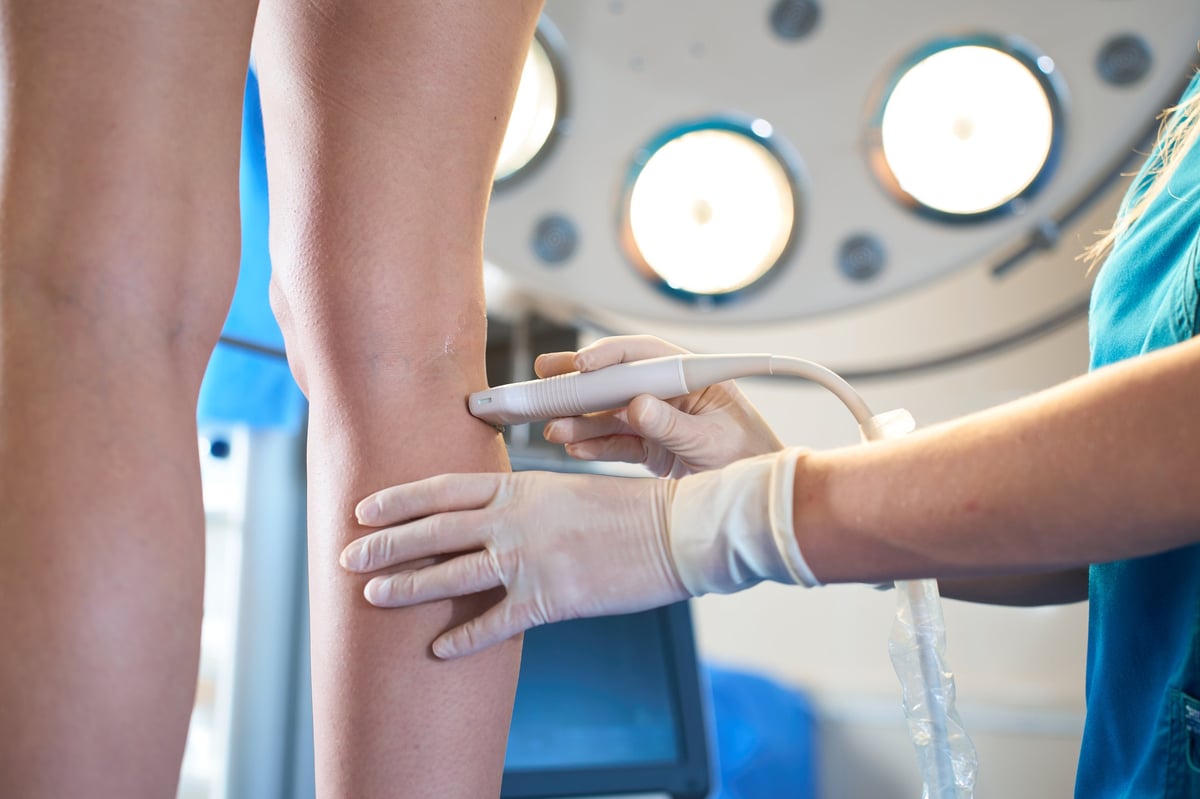
Vein Screening
Identifies circulation problems early
Regenerative Therapies
A2M and bone marrow aspirate support
There's no reason to wait passively for an appointment. A few simple habits can protect your nerves in the meantime:
Look for cuts, blisters, redness, or swelling. If you can't see the bottoms, use a mirror or ask someone to check for you. This single habit prevents most serious complications.
Blood sugar instability is the single biggest driver of nerve damage. Prioritize protein with every meal and avoid long gaps without food.
Walking improves circulation to the feet, which is critical for nerve health. Even short, frequent walks make a measurable difference.
Both are directly toxic to nerves and impair circulation. Reducing them is one of the highest-impact changes you can make.
Deficiencies are common, easy to test, and highly treatable. This is one of the first things we screen for.
Kennedy Health Center is located at 6 Sharpley Road in Wilmington, Delaware, minutes from I-95 and easily reached from across New Castle County. Patients travel to see us from Greenville, Newark, Hockessin, Middletown, Brandywine, and even from across the state lines in southeastern Pennsylvania, southern New Jersey, and northeastern Maryland.
If you've been searching for a neuropathy doctor in Wilmington who actually investigates the cause instead of just writing a prescription, this is what we do. Our team also treats related conditions including Type 2 diabetes and insulin resistance, medical weight loss, and regenerative medicine.
Because these conditions are so intertwined — diabetes driving neuropathy, circulation driving both — treating them together in one place tends to produce better outcomes than seeing five different specialists who never talk to each other.
Medical disclaimer: This article is for educational purposes and does not constitute medical advice or a diagnosis. Peripheral neuropathy has many possible causes, some serious. If you're experiencing any of the symptoms described, consult a qualified healthcare provider for a proper evaluation. Individual results vary.
The questions we hear most from Delaware patients about neuropathy.
The best time to address neuropathy was a year ago. The second-best time is now. Get a real evaluation from doctors who look for the cause — not just the symptom. Serving Wilmington, Newark, Greenville, and the entire Tri-State area.
More health insights from our Wilmington medical team.
High blood sugar is the leading cause of nerve damage. Learn the evidence-backed strategies that can reverse insulin resistance.
Before you consider surgery, explore how regenerative therapies address the root cause of chronic back and joint pain.
Why do chronic symptoms keep coming back? Learn how functional medicine looks beyond the diagnosis to find lasting answers.